

Thompson Cigar Alternative for Boutique Brands
Last Updated: October 30, 2026
Quick Summary
A Thompson Cigar alternative for boutique brands is a retailer that stocks small, independent producers rather than mainstream labels, and it is judged on selection depth, product detail, storage, shipping, returns, and price transparency. Compare retailers on those six points using blends you already know you like before placing a first order.
- Boutique brands are small, independently owned producers making cigars in limited quantities.
- Compare retailers on six factors: selection depth, product detail, freshness, shipping, returns, and price transparency.
- Ask whether inventory is humidified and what humidity range the warehouse keeps.
- Inspect cigars on arrival for mold, cracking, and soft spots, and photograph any damage promptly.
- Store cigars at roughly 65-70% relative humidity and around 65-70°F, using a calibrated hygrometer.
Table of Contents
- What Defines a Boutique Cigar Brand
- Boutique Producers Versus Widely Distributed Brands
- How to Assess Boutique Cigar Quality
- Comparing the Best Online Cigar Retailers
- Boutique Cigars Online: Shipping, Storage, and Freshness
- Cigar Bundles Online and What They Cost
- Choosing Your Next Boutique Cigar Order
- Frequently Asked Questions
A Thompson Cigar alternative for boutique brands is a retailer that focuses on small, independent producers rather than the mainstream labels that dominate most online catalogs. For smokers who want distinctive blends, the difference shows up in flavor, construction, and the level of expert guidance they receive. This guide walks through how to evaluate that kind of retailer, what to expect on price and shipping, and how to choose your next order with confidence.
What Defines a Boutique Cigar Brand
A boutique cigar brand is typically a small, independently owned producer that makes cigars in limited quantities. These brands often prioritize hand craftsmanship, distinctive blends, and consistency across each batch. Production runs are small enough that a single factory or rolling team can control the process closely.
Size alone does not make a brand boutique. The better markers are how the cigars are made and how many people handle them before they reach you. Hand-rolled long filler cigars, small-batch releases, and blends built around a specific house profile all point toward the boutique category.
A useful way to assess a producer looks for a few consistent traits:
- Limited production runs with clear batch identities
- Hand-made construction with attention to the draw and burn
- Transparent information about the blend and its components
- Stable quality from one box to the next
Boutique Producers Versus Widely Distributed Brands
Widely distributed brands are built for consistency at scale. They are sold in thousands of shops, so their blends are engineered to taste the same everywhere. That predictability has real value for a smoker who knows exactly what they like.
Boutique producers trade some of that uniformity for character. Their blends can vary more between releases, and their flavor profiles tend to be more distinctive. A boutique cigar may be creamier, spicier, or more complex than a mainstream equivalent, though individual results vary by blend and by smoker preference. Why premium cigars cost what they do explains the production behind that price difference.
The practical question is what you want from a purchase. If you value a reliable everyday smoke, a mainstream brand may suit you well. If you want something you cannot find on every shelf, boutique producers are the better starting point. Either way, a retailer that carries both gives you room to compare.
How to Assess Boutique Cigar Quality
Quality is easier to judge once you know what to check. Start with construction. A well-made cigar should feel firm without being hard, with an even wrapper and no obvious soft spots or loose seams. Gently squeeze it along its length and look for consistency.
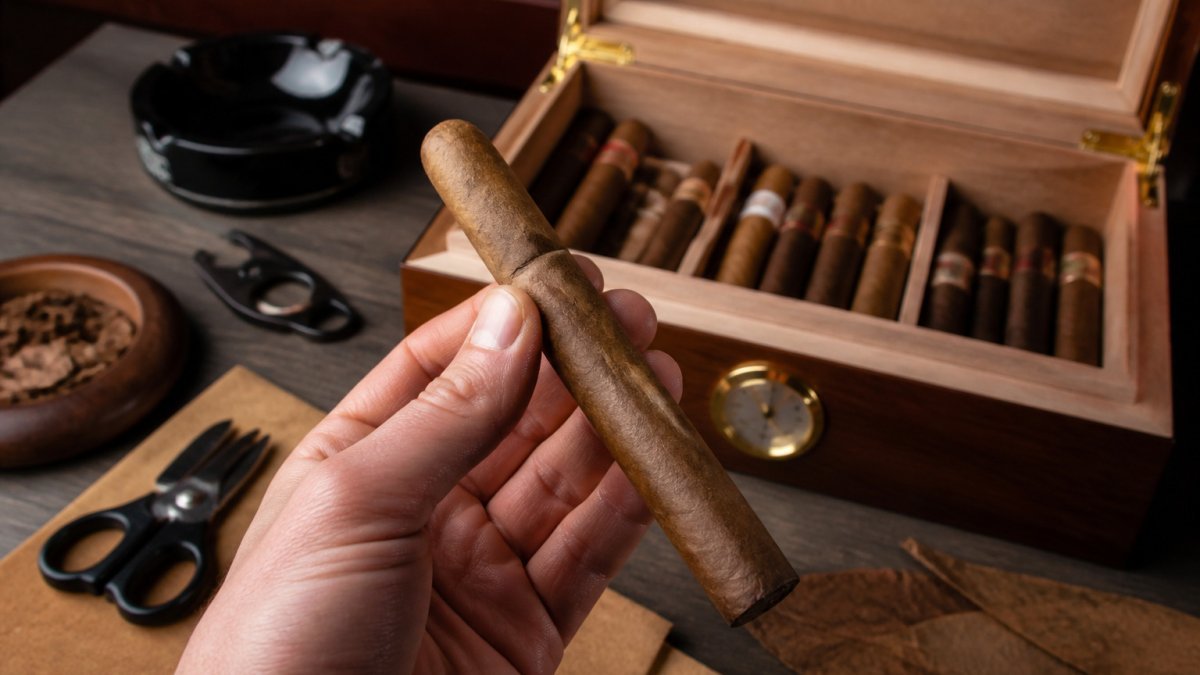
Next, consider the draw and the burn. A good cigar draws easily without feeling plugged or too loose, and it should burn evenly with a steady ash. Uneven burning often points to inconsistent rolling or poor storage, so it is worth paying attention to.
Storage matters as much as manufacturing. Cigars that have dried out or been stored in poor humidity will burn hot and taste flat, regardless of how well they were made. Keeping cigars at a stable humidity level once they arrive, and checking them regularly, is good practice.
A common mistake is judging a cigar only by its wrapper. The wrapper affects appearance and some flavor, but the binder and filler shape most of the smoking experience. Look at the whole cigar before deciding.
Comparing the Best Online Cigar Retailers
Most online cigar retailers look similar at first glance: a catalog, a cart, and a shipping promise. The differences that matter for a boutique-focused buyer show up in six places.
1. Boutique selection depth. Count how many independent, small-batch producers the retailer actually stocks, not how many total SKUs it lists.
2. Product information specificity. Good listings name the wrapper, binder, and filler origins, the factory, the strength level, and the release size. Weak listings repeat marketing language (“smooth, rich, premium”) with no blend detail.
3. Freshness and storage practices. Ask directly: Is inventory kept in a humidified warehouse? What humidity range? How long does stock sit before it ships? Retailers that move boutique inventory quickly and store it properly will answer plainly.
4. Shipping cost, speed, and packaging. Compare the flat-rate or free-shipping threshold, the carrier, and the transit time.
5. Return and replacement policy. Cigars are a perishable product, so policies vary.
6. Price transparency. A serious retailer publishes per-stick and per-box prices, shows whether a bundle is a discount over singles, and does not hide the real cost behind a membership or auction format.
A practical way to run the comparison: pick three boutique cigars you already know you like, then check availability, listed blend detail, price per stick, and shipping terms at each retailer. The retailer that wins on those four data points for your actual taste is the better alternative, not the one with the biggest banner ad.
Build a simple four-column worksheet, selection, product detail, shipping/freshness, price, and score each retailer 1-5. The exercise takes 20 minutes and prevents an expensive first order from the wrong shop.
For current pricing and availability on any specific boutique blend, check the product pages directly, since prices and stock change and no general range stays accurate for long.
The six areas below are the ones that separate a boutique-focused retailer from a mainstream one, and each can be checked on the same terms.
| Factor | What to check | Why it matters |
|---|---|---|
| Boutique selection depth | Count of independent, small-batch producers stocked | Separates boutique focus from a token boutique tab |
| Product information | Wrapper, binder, filler origins, factory, strength | Shows whether you can buy intelligently |
| Freshness and storage | Humidified warehouse, humidity range, time in stock | Freshness problems usually start here |
| Shipping and packaging | Rate, transit time, humidity pack, rigid packaging | A cheap rate means little if cigars arrive dry |
| Return policy | Stated window, damaged or moldy stick process | Cigars are perishable, so policies matter |
| Price transparency | Per-stick and per-box prices, bundle discounts shown | Hidden costs add friction to the comparison |
Boutique Cigars Online: Shipping, Storage, and Freshness
Shipping is where an online cigar purchase is most likely to go wrong, and it is the part of the transaction most buyers never think to evaluate. Treat shipping and storage as part of the product, not an afterthought.
What good shipping looks like. Ask the retailer three questions before ordering: How is the order packed? Does it include a humidity pack? What is the typical transit time to your region? Clear answers to these questions are a good sign.
Why transit time matters more than shipping cost. Cigars tolerate a few days in transit well when packed properly. Long ground transit in summer heat is the bigger risk.
Inspect on arrival. Open the package the day it arrives and check for three things: mold (white, fuzzy patches, plume is a different, crystalline appearance and is debated, but fuzzy growth is not), cracking or split wrappers from dryness, and soft or spongy spots that suggest under-humidification. If something is wrong, contact the retailer within its stated window and photograph the cigars before doing anything else.
Rest before you smoke. Cigars that have been in transit benefit from a rest period in stable conditions, commonly a week or more, before you judge them.
Storage targets. Many smokers keep cigars at roughly 65-70% relative humidity and around 65-70°F, and that is the range most often recommended for storage. A calibrated digital hygrometer is worth the small cost, analog hygrometers drift and are often inaccurate out of the box.
Buy quantities you will finish. Boutique cigars are best smoked within a reasonable window rather than cellared indefinitely unless you are deliberately aging them.
Do not store cigars in a refrigerator or freezer for routine keeping. Both are far too dry and introduce temperature swings and condensation that damage wrappers. Use a humidor or a sealed container with a humidity source and a hygrometer.
Freshness is the most common reason online buyers feel let down, and it is almost always a shipping and storage problem rather than a blending problem. Ask the retailer how stock is held and how orders are packed, inspect on arrival, rest before smoking, and store within the 65-70% range, that sequence solves most of what goes wrong between checkout and the first light.
Cigar Bundles Online and What They Cost
Bundles let you try several cigars at once. They are a sensible way to explore a range of boutique blends without committing to a full box of any single cigar.
Bundle contents and pricing can change, so compare the current contents against the price before ordering. Check how many cigars come in each bundle, which blends are included, and whether the mix suits your taste. For up-to-date bundle pricing, visit the Cabrera Cigars website or contact the team.
A bundle is most useful when it fits how you actually smoke. If you enjoy one style, a bundle built around it will serve you better than a random mix.
Choosing Your Next Boutique Cigar Order
Start with what you enjoy. Guidance on buying premium cigars online with confidence can help you narrow options before you check out. Think about the strength, flavor, and burn you like, and whether you prefer a milder everyday smoke or something richer for a special occasion. A short list of preferences makes it much easier to choose among boutique options.
Then decide on quantity. A single cigar or small bundle is a low-risk way to test a new blend. A larger box makes more sense once you know a blend suits you. Buying in stages helps you avoid stocking cigars you do not finish.
Finally, buy from a retailer that answers your questions clearly. If you are unsure which boutique cigar fits your taste, contacting the retailer directly can help you narrow the choice before you order.
Frequently Asked Questions
What are the best alternatives to Thompson Cigar for boutique brands?
Look for online shops that carry a curated mix of boutique and established heritage brands rather than only mass-market lines. Compare how each retailer describes its selection, whether it lists brand origins, and how it handles packaging and humidity during shipping. Cabrera Cigars, a Miami-based retailer with over 40 years of industry experience, offers hand-made long filler cigars from brands such as Oliva, PDR, and Arturo Fuente, plus its own boutique bundles crafted in Nicaragua. Check current inventory and pricing directly on the retailer’s site before ordering.
Where can I buy boutique cigars online?
Boutique cigars are sold through specialty online retailers that focus on premium and small-batch brands. When comparing sites, check whether they describe storage and shipping conditions, list the brands they carry, and offer clear customer service contact details. Cabrera Cigars sells a curated selection of premium and boutique brands online and can also be reached directly for questions about a specific order. Pricing varies by product, quantity, and delivery option, so confirm costs at checkout.
What should I look for when choosing an online cigar shop?
Start with selection: does the shop carry brands you already enjoy and new boutique options? Next, review how it handles humidity and packaging, since dried-out cigars are a common complaint with online orders. Look for transparent company information, responsive customer service, and clear shipping timelines, especially if you need a set of cigars for an event. Finally, compare total cost including shipping rather than only the listed price per cigar.
Are boutique cigars worth trying?
Boutique cigars are often produced in smaller batches with more hands-on attention to construction and blend consistency, which many smokers value. They can be worth trying if you want a distinctive flavor profile or a premium experience for a special occasion. Beginners can start with a single sample or a small bundle to find a strength and flavor they enjoy before committing to a larger order.
Ready to explore a curated selection of boutique cigars? Browse our current selection to compare blends, or read how to find high quality cigars for sale before you place your order. You can also review cigar box deals that reward better taste if a bundle suits you better.
