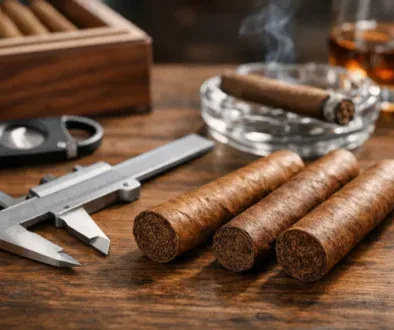

How to Store Cigars Properly for Peak Flavor
A premium cigar can spend years developing character in a factory aging room, then lose its balance in a few weeks on a dry desk or overheated shelf. Knowing how to store cigars properly protects the investment you make in fine tobacco and ensures that an Oliva, Romeo y Julieta, AJ Fernandez, or Cabrera Cigars selection performs as its blender intended.
Proper storage is not complicated, but it is precise. Cigars need a stable environment where the wrapper remains supple, the filler burns evenly, and the oils that carry aroma and flavor stay in balance. The goal is consistency, not constant adjustment.
How to Store Cigars Properly: The Right Conditions
For most premium cigars, aim for relative humidity between 65% and 70% and a temperature around 65 to 70 degrees Fahrenheit. The familiar standard of 70% humidity at 70 degrees is workable, but many experienced smokers prefer 65% to 69% humidity, particularly for cigars with a thicker ring gauge or an oily, delicate wrapper.
At slightly lower humidity, cigars often draw more freely and burn more cleanly. They can also show sharper flavor definition. A cigar stored too dry, however, may burn hot, taste harsh, crack at the wrapper, or feel hollow when gently pressed. Too much moisture creates a different set of problems: difficult draws, uneven burns, muted flavor, and a real risk of mold.
Temperature matters just as much as humidity. Heat encourages tobacco beetles, which can damage an entire collection. Keep your humidor away from sunny windows, kitchen appliances, HVAC vents, garages, and cars. If your home regularly exceeds 72 degrees, a temperature-controlled cigar cabinet is worth considering for a larger collection.
Choose a Humidor That Fits Your Collection
A quality humidor is the simplest answer for anyone keeping more than a handful of premium cigars. Spanish cedar is the traditional lining because it helps moderate humidity, contributes a pleasant cedar aroma, and discourages tobacco beetles. It should be a lining, not merely a decorative veneer.
Size deserves more thought than most new collectors give it. A humidor should not be packed to the absolute limit, but neither should it hold only two cigars in a large empty chamber. Leave enough space for air to circulate around the cigars. If you buy cigars by the box, choose a cabinet, large desktop humidor, or multiple storage units that can accommodate your purchasing habits without crowding.
The seal is critical. Close the lid gently. It should seat cleanly and hold humidity without dramatic swings. A humidor does not need to make a theatrical thump when closed, but it should not feel loose or warped. Before adding cigars, season a new wood-lined humidor according to the manufacturer’s instructions so the cedar does not pull moisture from your collection.
For travelers or smokers keeping a small rotation, an airtight cigar case or sealed container with a humidity pack can work very well. These solutions are practical, especially for short-term storage, but they do not offer the display appeal or capacity of a traditional humidor.
Use Reliable Humidity Control
The old practice of refilling a sponge-style humidifier with tap water creates more problems than it solves. Tap water can introduce minerals, bacteria, and odors. Overly wet humidifiers can also send humidity soaring, leaving cigars swollen and difficult to smoke.
Modern two-way humidity packs are an excellent choice for dependable, low-maintenance storage. They release or absorb moisture as conditions change, which helps keep the humidor within a narrow range. Choose a humidity level suited to your preference, then use enough packs for the interior volume and number of cigars you are storing.
If you prefer beads, gel, or an electronic humidification system, use distilled water or the solution specified by the manufacturer. Electronic systems can be particularly useful in larger cabinets, but they require periodic cleaning and calibration. More equipment does not automatically mean better storage. A simple setup that stays steady is preferable to an elaborate one that needs daily correction.
A digital hygrometer is another smart investment. Analog hygrometers can look handsome, but they are often inaccurate unless calibrated regularly. Place the hygrometer where you can read it without repeatedly opening the humidor, and give it time to reflect conditions before reacting to a small change.
Store Cigars With Room to Rest
Cigars benefit from stillness. Once they are in a stable humidor, resist the urge to open the lid every day to inspect them. Brief checks once or twice a week are usually enough for a desktop humidor, while a well-regulated cabinet may need even less attention.
Keep cigars in their cellophane if you want to preserve individual wrappers, reduce handling marks, or separate different blends. Cellophane does not prevent proper humidification. Remove it if you prefer direct cedar contact, are aging boxes long-term, or want cigars to share a more unified humidor aroma. Either approach can work when the environment is stable.
Try not to store strongly flavored infused cigars alongside traditional premium cigars. The aromas can transfer over time, especially in a smaller humidor. Separate them with a divider, keep them in their original box, or use a dedicated storage container.
If you have a mix of vitolas, avoid stacking delicate wrappers beneath heavy boxes or large cigars. Rotate your inventory gently every month or two, moving cigars from the bottom to the top when appropriate. This is less about obsessively rearranging the humidor and more about ensuring even airflow.
What to Do When Cigars Arrive Dry or Overhumidified
Mail-order cigars may need time to acclimate after shipping, especially during a hot summer or cold winter. Place them in your humidor and leave them undisturbed for at least one to two weeks before judging their condition. For a full box intended for aging, several weeks of rest can make a meaningful difference.
If cigars feel dry, do not attempt a rapid rescue by raising humidity to 75% or higher. Fast rehydration can split wrappers and cause the outer leaf to expand before the filler has recovered. Instead, keep the humidor around 65% and allow the tobacco to regain moisture gradually over several weeks.
When cigars feel overly soft, burn poorly, or show a tight draw, lower the humidity modestly. Move from 70% toward 65% or 66%, not from one extreme to another. Tobacco responds best to patient adjustments.
Mold, Plume, and the Signs You Should Not Ignore
A dusty white bloom on an aged cigar may be plume, also called bloom, which can be gently wiped away. Mold is usually fuzzy, raised, or spotted and may appear green, blue, black, or bright white. When in doubt, treat it as mold.
Remove affected cigars immediately and inspect the humidor, cedar trays, and nearby cigars. Clean the empty humidor carefully, let it dry completely, and re-establish stable humidity before returning unaffected cigars. Mold is a warning that moisture has been too high, airflow has been poor, or both.
Also inspect for tiny pinholes in the wrapper, loose tobacco dust, or small insects. These can indicate tobacco beetles. If you suspect an infestation, isolate the cigars at once. Prevention is far easier than recovering a collection after beetle damage.
Keep the Routine Simple
The best cigar storage routine is measured rather than fussy. Check your digital hygrometer, replace humidity packs or refill your system when needed, and keep the humidor in a cool, shaded part of the home. Let new purchases rest before smoking, and give special cigars the same patience and care that went into making them.
A well-kept humidor does more than preserve cigars. It gives every smoke, whether it is a dependable weekday favorite or a prized cigar saved for a milestone, the chance to deliver the refined flavor and craftsmanship that made it worth choosing in the first place.